
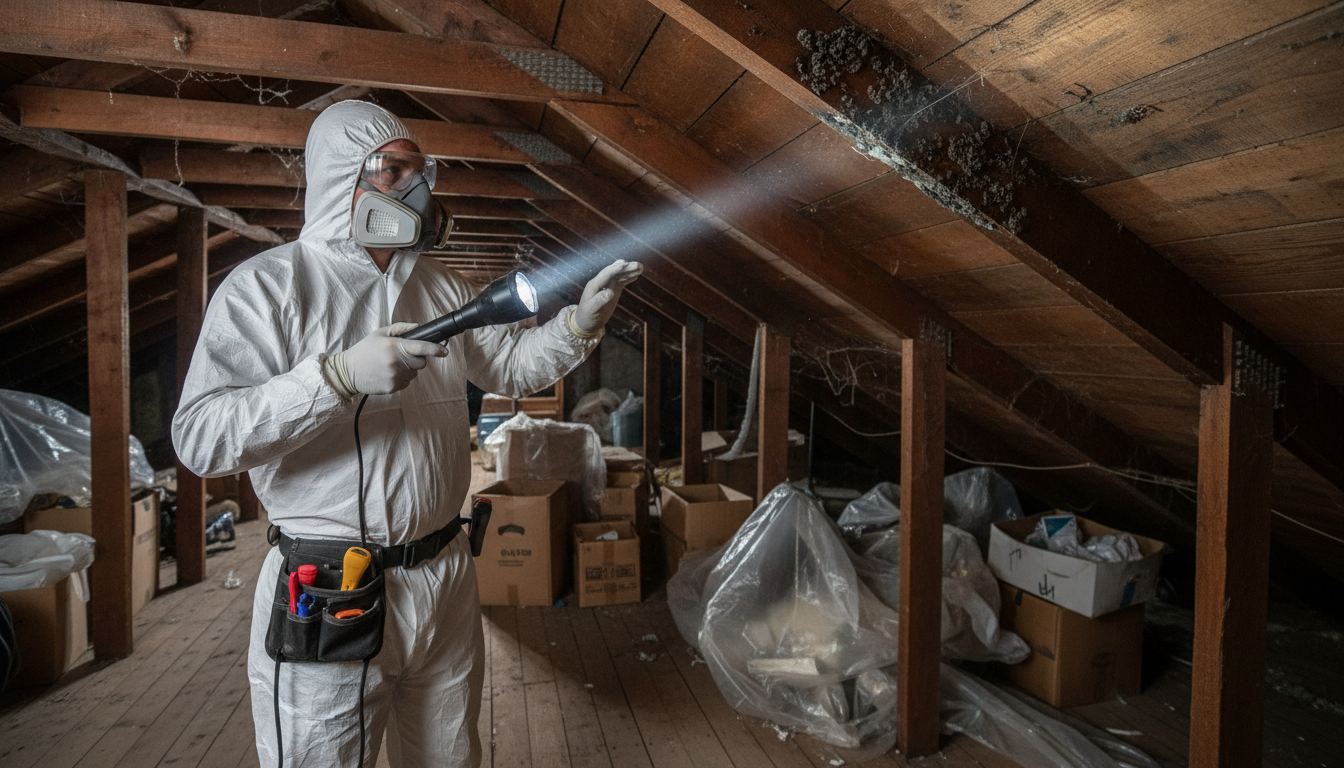
Attic Mold Remediation
Dallas attics are mold incubators. When outdoor temperatures hit 100°F, your attic soars past 150°F during the day. At night, the temperature drops 50–60 degrees. This cycle creates condensation on the underside of roof sheathing — especially if the attic is poorly ventilated or if bathroom exhaust fans dump moist air directly into the attic space (a code violation we find in roughly one in five Dallas-area homes we inspect).
How Attic Mold Develops in Texas
Attic mold in Dallas follows a predictable pattern. During summer, the extreme heat-to-cool cycle creates condensation on roof sheathing. In winter, warm moist air from the living space rises into the attic and condenses on cold roof decking. Both seasons feed mold growth on plywood sheathing, OSB board, and insulation.
The most common causes we find in Dallas attics:
• **Bathroom exhaust fans vented into the attic** instead of through the roof — the single most common code violation in DFW homes • **Insufficient ridge and soffit ventilation** — many Dallas homes have vinyl soffit that was installed over the original wood soffit, blocking airflow • **Roof leaks around flashing, valleys, and pipe boots** — Texas UV exposure degrades roofing materials faster than northern climates • **Improperly installed vapor barriers** that trap moisture in the wrong place
Attic Mold Remediation Process
Attic mold remediation is different from room-level work. We're dealing with large surface areas (the entire roof deck), awkward access, and extreme temperatures. Our process is specifically adapted for Texas attics:
**Containment:** We seal the attic access point to prevent spores from entering the living space. Negative air machines with HEPA filtration keep contaminated air from spreading.
**Surface Treatment:** Mold on roof sheathing and framing is treated with commercial-grade antimicrobial solutions and mechanically cleaned. We use dry-ice blasting for severe contamination — it removes mold from wood grain without damaging the sheathing.
**Insulation Replacement:** Contaminated blown-in or batt insulation is removed and replaced. We install new insulation to current energy code standards, which often means a net improvement in your home's thermal performance.
**Ventilation Correction:** We verify and correct attic ventilation — adding ridge vent, soffit vent, or powered ventilation as needed. Bathroom exhaust fans are re-routed through the roof if currently dumping into the attic.
Signs Your Dallas Attic Has Mold
Most homeowners don't go into their attic regularly, so attic mold often goes undiscovered until a home inspection or a noticeable smell. Watch for these signs:
• Dark staining on the underside of roof sheathing (visible from the attic) • Musty smell that's stronger upstairs or near ceiling vents • Unexplained respiratory symptoms that worsen indoors • Discolored ceiling stains that aren't from a visible leak • Energy bills that have increased (degraded insulation from moisture damage)
If your Dallas home was built before 2010 and you've never had the attic inspected for mold, it's worth a look — especially if bathroom exhaust fans weren't originally routed through the roof.
Our process
How we handle attic mold remediation in Dallas, step by step.
Attic Access & Assessment
We inspect the entire attic space — roof sheathing, framing, insulation, ventilation, and exhaust fan routing — and document the extent of contamination.
Containment & Air Filtration
The attic access point is sealed. HEPA air scrubbers prevent spore migration into your living space during remediation.
Mold Removal & Treatment
Sheathing and framing are treated and cleaned. Contaminated insulation is removed. Dry-ice blasting is used for severe cases.
Ventilation Repair & Prevention
We correct ventilation deficiencies, re-route improperly vented exhaust fans, and install new insulation to current code.
Need Attic Mold Remediation in Dallas?
Call now for a free inspection and same-day response. Our certified technicians are available 24/7.
(214) 432-6986Frequently asked questions
Can attic mold affect the rest of my house?
Yes. Mold spores are airborne and can migrate from the attic into your living space through ceiling penetrations, recessed lights, attic access doors, and ductwork. Many Dallas homeowners experience respiratory symptoms from attic mold they've never seen.
How much does attic mold remediation cost in Dallas?
Attic remediation typically costs $3,000–$8,000 depending on the attic size and severity of contamination. This includes mold removal, insulation replacement, and ventilation correction. We provide detailed estimates after inspection.
Will my roof need to be replaced if there's attic mold?
Not usually. Attic mold grows on the underside of roof sheathing and can be treated without removing the roof. If sheathing has been structurally compromised by long-term decay, those sections may need replacement, but this is uncommon in cases caught early.
Other mold removal services
We handle every type of mold problem in Dallas homes.
Mold Inspection & Testing
You suspect mold in your Dallas home, but you can't see it — or you can see it and don't know how far it's spread. Our c...
Black Mold Removal
Black mold — specifically Stachybotrys chartarum — produces mycotoxins that can cause serious respiratory problems, head...
Bathroom Mold Removal
Bathrooms are the most common place Dallas homeowners find mold — and for good reason. Hot showers push humidity past 80...
Crawl Space Mold Removal
Many Dallas homes — especially those built before 1980 in neighborhoods like Lakewood, Oak Cliff, and East Dallas — sit ...
Water Damage Mold Prevention
Mold doesn't wait. After a pipe burst, storm flood, or appliance leak, mold begins colonizing damp materials within 24–4...