
Crawl Space Mold Removal
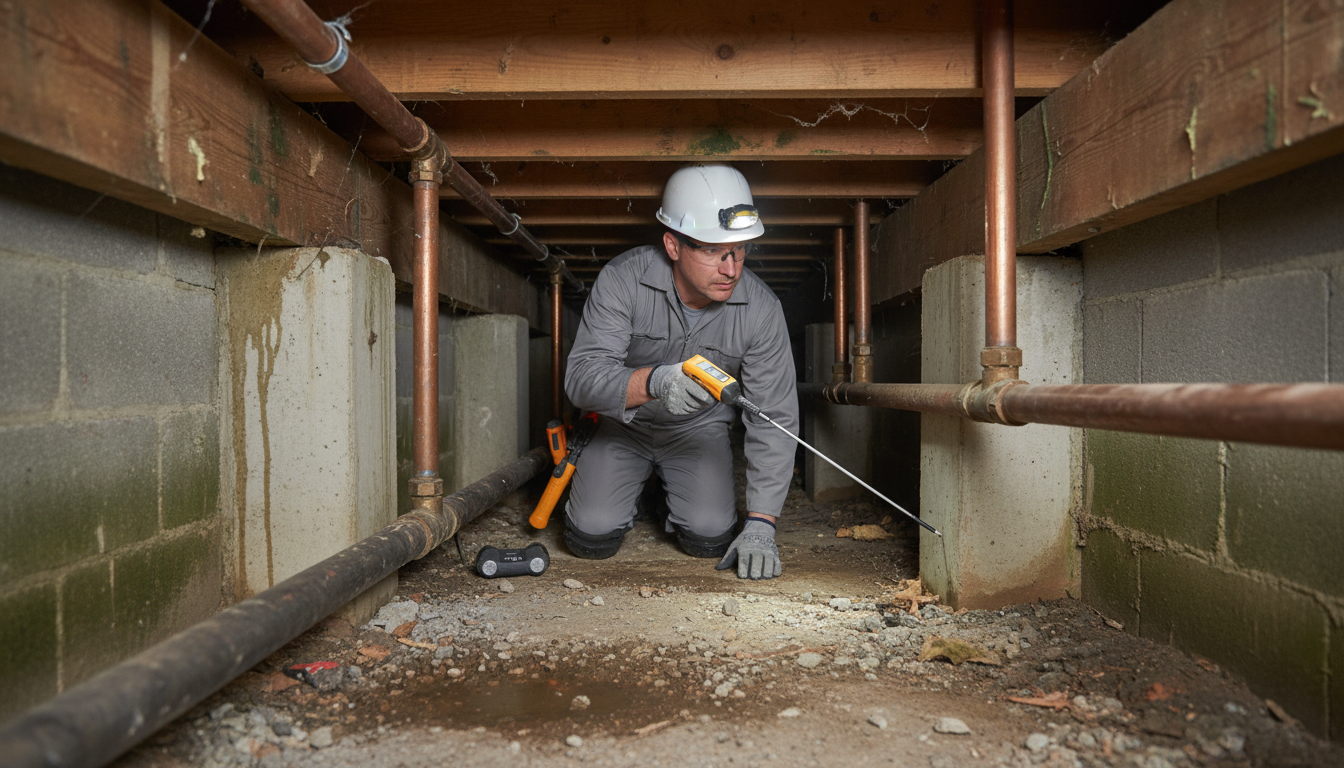
Many Dallas homes — especially those built before 1980 in neighborhoods like Lakewood, Oak Cliff, and East Dallas — sit on pier-and-beam foundations with crawl spaces underneath. These crawl spaces are chronically damp: ground moisture rises through bare soil, Dallas rainstorms push water against the foundation, and the warm Texas air creates condensation on cool floor joists. The result is mold on subflooring, floor joists, and anything stored beneath the house.
Why Dallas Crawl Spaces Grow Mold
Dallas soil is predominantly Eagle Ford clay — a highly expansive clay that absorbs water during rain and releases it slowly. Below your crawl space, this soil acts like a sponge, evaporating moisture into the enclosed space for weeks after a rainstorm.
Without a vapor barrier, that moisture condenses on the cooler wood surfaces of floor joists and subflooring, creating ideal conditions for mold growth. We regularly measure crawl space humidity above 80% in Dallas homes without proper moisture control — well above the 60% threshold where mold begins to grow.
Additional moisture sources include poor yard grading that directs rainwater toward the foundation, leaking plumbing lines running through the crawl space, and AC condensate drains that terminate too close to the foundation.
Crawl Space Mold Remediation Process
Crawl space remediation addresses both the existing mold and the moisture conditions that caused it. Cleaning mold without fixing the moisture source guarantees it'll return within months.
**Mold Removal:** We treat contaminated floor joists, subflooring, and sill plates with antimicrobial solutions, then sand or media-blast surfaces to remove embedded mold. If structural members are decay-compromised, we sistered or replace them.
**Vapor Barrier Installation:** A 12–20 mil reinforced polyethylene vapor barrier is installed over the entire crawl space floor and attached to foundation walls. This is the single most effective measure against crawl space moisture in Dallas soil conditions. Seams are sealed with moisture-resistant tape.
**Drainage & Grading:** If water intrusion is active, we install interior french drains or sump pumps and recommend exterior grading corrections to redirect surface water away from the foundation.
**Ventilation or Encapsulation:** Depending on your home's design, we either optimize foundation vents for passive airflow or fully encapsulate the crawl space with a dehumidifier system — the better option for Dallas's high ambient humidity.
Signs of Crawl Space Mold in Your Dallas Home
Crawl spaces are out of sight, so the symptoms show up inside your living space:
• Musty or earthy smell on the first floor — especially noticeable when the AC kicks on • Floors that feel soft, bouncy, or uneven (joists weakened by mold and moisture) • Increased allergy or asthma symptoms for first-floor occupants • Higher-than-normal indoor humidity readings on the ground floor • Visible moisture stains on baseboards or lower walls
If your Dallas home has a pier-and-beam foundation and you haven't inspected the crawl space recently, it's worth scheduling a look — especially if the home is in a flood-prone area or has older plumbing.
Our process
How we handle crawl space mold removal in Dallas, step by step.
Crawl Space Entry & Assessment
We inspect floor joists, subflooring, sill plates, plumbing, and soil conditions. Moisture readings are taken throughout.
Mold Treatment & Surface Cleaning
Contaminated wood is treated with antimicrobials and mechanically cleaned. Structurally compromised members are repaired or replaced.
Vapor Barrier Installation
Heavy-duty polyethylene vapor barrier is installed over the crawl space floor and sealed to foundation walls, blocking ground moisture.
Moisture Control & Prevention
Drainage solutions, dehumidification, and ventilation improvements ensure the crawl space stays dry long-term.
Need Crawl Space Mold Removal in Dallas?
Call now for a free inspection and same-day response. Our certified technicians are available 24/7.
(214) 432-6986Frequently asked questions
How much does crawl space mold removal cost in Dallas?
Crawl space remediation in Dallas typically ranges from $3,000 to $10,000 depending on the crawl space size, severity of mold, and whether vapor barrier installation or drainage work is needed. We provide a detailed estimate after inspection.
Should I encapsulate my crawl space or just add vents?
In Dallas's humid climate, full encapsulation with a dehumidifier generally outperforms vented crawl spaces. Vents bring in humid outdoor air during summer, which can actually increase crawl space moisture. We assess your specific situation and recommend the most effective approach.
Can crawl space mold affect my indoor air quality?
Absolutely. Studies show that 40–50% of the air you breathe on the first floor comes from the crawl space through the stack effect. Mold spores, moisture, and musty odors migrate upward through gaps in the subfloor, around pipes, and through HVAC ductwork.
Other mold removal services
We handle every type of mold problem in Dallas homes.
Mold Inspection & Testing
You suspect mold in your Dallas home, but you can't see it — or you can see it and don't know how far it's spread. Our c...
Black Mold Removal
Black mold — specifically Stachybotrys chartarum — produces mycotoxins that can cause serious respiratory problems, head...
Bathroom Mold Removal
Bathrooms are the most common place Dallas homeowners find mold — and for good reason. Hot showers push humidity past 80...
Attic Mold Remediation
Dallas attics are mold incubators. When outdoor temperatures hit 100°F, your attic soars past 150°F during the day. At n...
Water Damage Mold Prevention
Mold doesn't wait. After a pipe burst, storm flood, or appliance leak, mold begins colonizing damp materials within 24–4...