
Water Damage Mold Prevention
Mold doesn't wait. After a pipe burst, storm flood, or appliance leak, mold begins colonizing damp materials within 24–48 hours. In Dallas's warm, humid climate, that timeline is often shorter. Every hour between the water event and professional drying increases the likelihood — and cost — of mold remediation. Our rapid-response team gets drying equipment running in your home within hours of your call, stopping mold before it starts.
The 48-Hour Window
The science is straightforward: mold spores are already in every home, floating in the air in low concentrations. They're dormant and harmless — until they land on a wet surface with organic material (drywall paper, wood, carpet padding, dust). In Dallas's ambient temperatures of 75–95°F, germination happens fast.
• **0–24 hours:** Moisture wicks into drywall, subfloor, and insulation. No visible mold yet, but spores are activating. • **24–48 hours:** Mold begins to colonize. You may notice a faint musty smell. • **48–72 hours:** Visible mold growth appears on surfaces. The longer wet materials sit, the deeper mold penetrates. • **1 week+:** Mold has spread behind walls, into HVAC ducts, and through structural cavities. Remediation costs multiply.
The goal of our water damage response is to get your home dried below 60% relative humidity within that first 48-hour window — before mold has a chance to establish.
Our Rapid-Response Drying Process
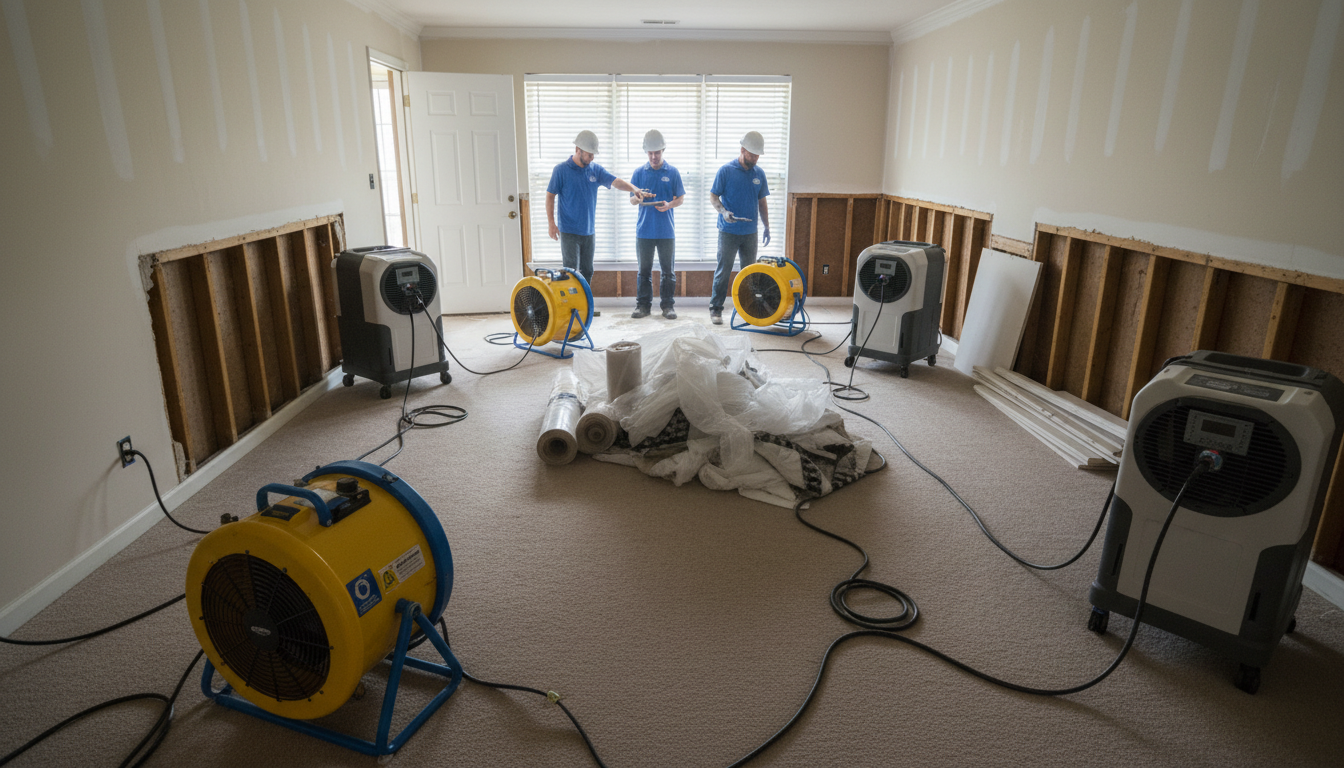
When you call us after water damage, we dispatch a crew with professional drying equipment — not a shop vac and a box fan.
**Water Extraction:** We use truck-mounted extractors to remove standing water from carpets, hard floors, and subfloor cavities. Submersible pumps handle deeper flooding.
**Structural Drying:** Commercial air movers and LGR (low-grain refrigerant) dehumidifiers are placed throughout the affected area. LGR units remove 30–40% more moisture than conventional dehumidifiers — critical in Dallas's already-humid air.
**Moisture Monitoring:** We place moisture sensors in walls, floors, and cavities and check readings daily. The equipment stays until every monitored point reads at or below the target moisture content for that material.
**Antimicrobial Treatment:** All affected surfaces receive antimicrobial application to kill any mold spores that activated during the wet period. This is the critical step most DIY approaches skip.
Common Water Damage Scenarios in Dallas
Dallas homes face water damage from several common sources:
• **Storm flooding:** Heavy rains in May and October can overwhelm storm drains and push water into homes, especially in low-lying areas near White Rock Creek, the Trinity River corridor, and older neighborhoods without modern drainage • **Pipe bursts:** Dallas's aging water infrastructure and the rare hard freeze (remember February 2021) can rupture supply lines. Hot water heater failures in garages and utility closets are another frequent culprit. • **Appliance leaks:** Washing machine hoses, dishwasher connections, and refrigerator water lines fail gradually. The slow leak behind or under an appliance often goes unnoticed for weeks. • **Roof leaks:** Texas UV exposure degrades roofing materials. After storms with hail or high winds, water can enter through compromised shingles, flashing, or pipe boots.
In every case, the priority is the same: remove water, dry the structure, and apply antimicrobial treatment before mold takes hold.
Our process
How we handle water damage mold prevention in Dallas, step by step.
Emergency Call & Dispatch
Call (214) 432-6986 any time — 24/7. We dispatch a crew with extraction and drying equipment, typically arriving within 2–4 hours.
Water Extraction
Standing water is removed with professional extractors and pumps. Wet carpet padding and saturated materials are pulled.
Structural Drying & Monitoring
Commercial air movers and LGR dehumidifiers run 24/7. Moisture sensors in walls and floors are checked daily until target levels are reached.
Antimicrobial Application
All affected surfaces are treated to prevent mold growth. If any mold has already appeared, we remediate it before closing up walls.
Need Water Damage Mold Prevention in Dallas?
Call now for a free inspection and same-day response. Our certified technicians are available 24/7.
(214) 432-6986Frequently asked questions
How quickly can you respond to water damage in Dallas?
We maintain 24/7 emergency availability across the Dallas metro area. In most cases, a crew with drying equipment is at your door within 2–4 hours of your call. Faster response means less mold risk.
Will my insurance cover water damage restoration?
Most homeowners policies cover sudden and accidental water damage — pipe bursts, appliance failures, storm damage from covered perils. Gradual leaks and flood damage (requiring separate flood insurance) are typically excluded. We document everything for your insurance claim.
How long does the drying process take?
Most residential drying jobs take 3–5 days depending on the extent of water damage and the materials affected. We monitor daily with moisture meters and don't pull equipment until every reading hits target levels.
Other mold removal services
We handle every type of mold problem in Dallas homes.
Mold Inspection & Testing
You suspect mold in your Dallas home, but you can't see it — or you can see it and don't know how far it's spread. Our c...
Black Mold Removal
Black mold — specifically Stachybotrys chartarum — produces mycotoxins that can cause serious respiratory problems, head...
Bathroom Mold Removal
Bathrooms are the most common place Dallas homeowners find mold — and for good reason. Hot showers push humidity past 80...
Attic Mold Remediation
Dallas attics are mold incubators. When outdoor temperatures hit 100°F, your attic soars past 150°F during the day. At n...
Crawl Space Mold Removal
Many Dallas homes — especially those built before 1980 in neighborhoods like Lakewood, Oak Cliff, and East Dallas — sit ...