
Black Mold Removal
Black mold — specifically Stachybotrys chartarum — produces mycotoxins that can cause serious respiratory problems, headaches, and chronic fatigue. If you've found dark, slimy patches growing on drywall, wood, or ceiling tiles in your Dallas home, don't disturb them. Disturbing black mold releases spores into the air, spreading contamination. Call us and let certified technicians handle containment and removal safely.
Understanding Black Mold in Dallas Homes
Stachybotrys thrives in persistently wet conditions — it needs cellulose material (drywall paper, wood, ceiling tiles) and at least 48–72 hours of continuous moisture. In Dallas, the most common sources are slow plumbing leaks behind walls, chronically damp crawl spaces, and water intrusion from storm damage that was never fully dried.
Black mold typically appears as dark greenish-black patches with a slimy or wet texture. It often grows behind vanities, under sinks, on basement walls, or in areas where water damage was "fixed" without addressing hidden moisture. The musty, earthy smell is often the first sign — you smell it before you see it.
Our Black Mold Remediation Protocol
We follow IICRC S520 standards for every black mold remediation project. Here's what that means in practice:
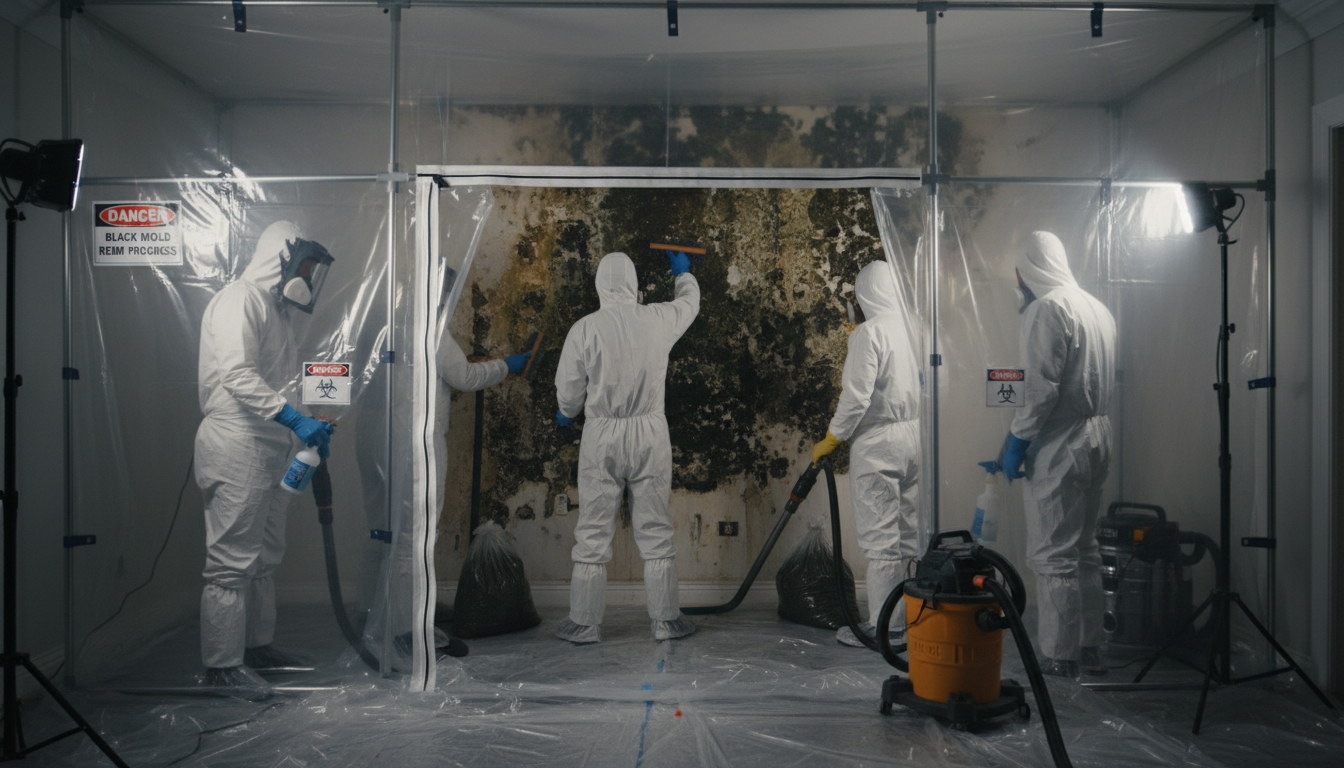
**Full Containment:** We seal the affected area with 6-mil polyethylene sheeting and create negative air pressure using HEPA-filtered air scrubbers. This prevents spores from migrating to clean areas of your home during removal.
**Personal Protective Equipment:** Our technicians wear full-face respirators with P100 filters, disposable Tyvek suits, and nitrile gloves. Black mold remediation isn't a job for an N95 mask and a spray bottle.
**Systematic Removal:** Contaminated porous materials — drywall, insulation, carpet padding — are cut out, double-bagged in 6-mil poly, and disposed of according to Texas regulations. Non-porous surfaces are cleaned with professional antimicrobial solutions and HEPA-vacuumed.
**Post-Remediation Verification:** After removal, we perform clearance testing with air samples to confirm spore levels have returned to normal background levels. You get written confirmation that the space is safe to reoccupy.
Health Risks of Black Mold Exposure
The Texas Department of State Health Services recognizes Stachybotrys as a serious indoor air quality concern. Exposure symptoms include persistent coughing, wheezing, nasal congestion, eye irritation, skin rashes, headaches, and fatigue. People with asthma, allergies, or compromised immune systems are at higher risk.
If your family is experiencing unexplained respiratory symptoms — especially if they improve when you leave the house and worsen when you return — mold exposure should be investigated immediately. Don't wait for visible growth; hidden mold behind walls can affect air quality throughout the home.
Our process
How we handle black mold removal in Dallas, step by step.
Emergency Assessment
We inspect the affected area, test for Stachybotrys, and determine the full extent of contamination — including behind walls and above ceilings.
Containment Setup
Poly sheeting, negative air pressure, and HEPA air scrubbers isolate the work area from the rest of your home.
Safe Removal & Treatment
Contaminated materials are removed and disposed of. Remaining surfaces are treated with antimicrobials and HEPA-vacuumed.
Clearance Testing
Post-remediation air samples confirm spore levels are back to safe levels. You receive written clearance documentation.
Need Black Mold Removal in Dallas?
Call now for a free inspection and same-day response. Our certified technicians are available 24/7.
(214) 432-6986Frequently asked questions
Is all black-colored mold dangerous?
No. Many common mold species appear dark or black but aren't Stachybotrys. That's why lab testing matters — we identify the species before recommending a protocol. However, any visible mold growth should be addressed regardless of species.
Can I remove black mold myself?
The EPA recommends professional remediation for any mold area larger than 10 square feet. For suspected Stachybotrys, professional removal is always recommended regardless of size because of the health risks and the potential to spread spores during amateur removal.
How much does black mold removal cost in Dallas?
Costs depend on the extent of contamination. A contained bathroom remediation might run $1,500–$3,000. Larger projects affecting multiple rooms can range from $5,000 to $15,000+. We provide detailed estimates before starting work.
Other mold removal services
We handle every type of mold problem in Dallas homes.
Mold Inspection & Testing
You suspect mold in your Dallas home, but you can't see it — or you can see it and don't know how far it's spread. Our c...
Bathroom Mold Removal
Bathrooms are the most common place Dallas homeowners find mold — and for good reason. Hot showers push humidity past 80...
Attic Mold Remediation
Dallas attics are mold incubators. When outdoor temperatures hit 100°F, your attic soars past 150°F during the day. At n...
Crawl Space Mold Removal
Many Dallas homes — especially those built before 1980 in neighborhoods like Lakewood, Oak Cliff, and East Dallas — sit ...
Water Damage Mold Prevention
Mold doesn't wait. After a pipe burst, storm flood, or appliance leak, mold begins colonizing damp materials within 24–4...